Automotive Tool Set Explained: A UK Buyer's Guide
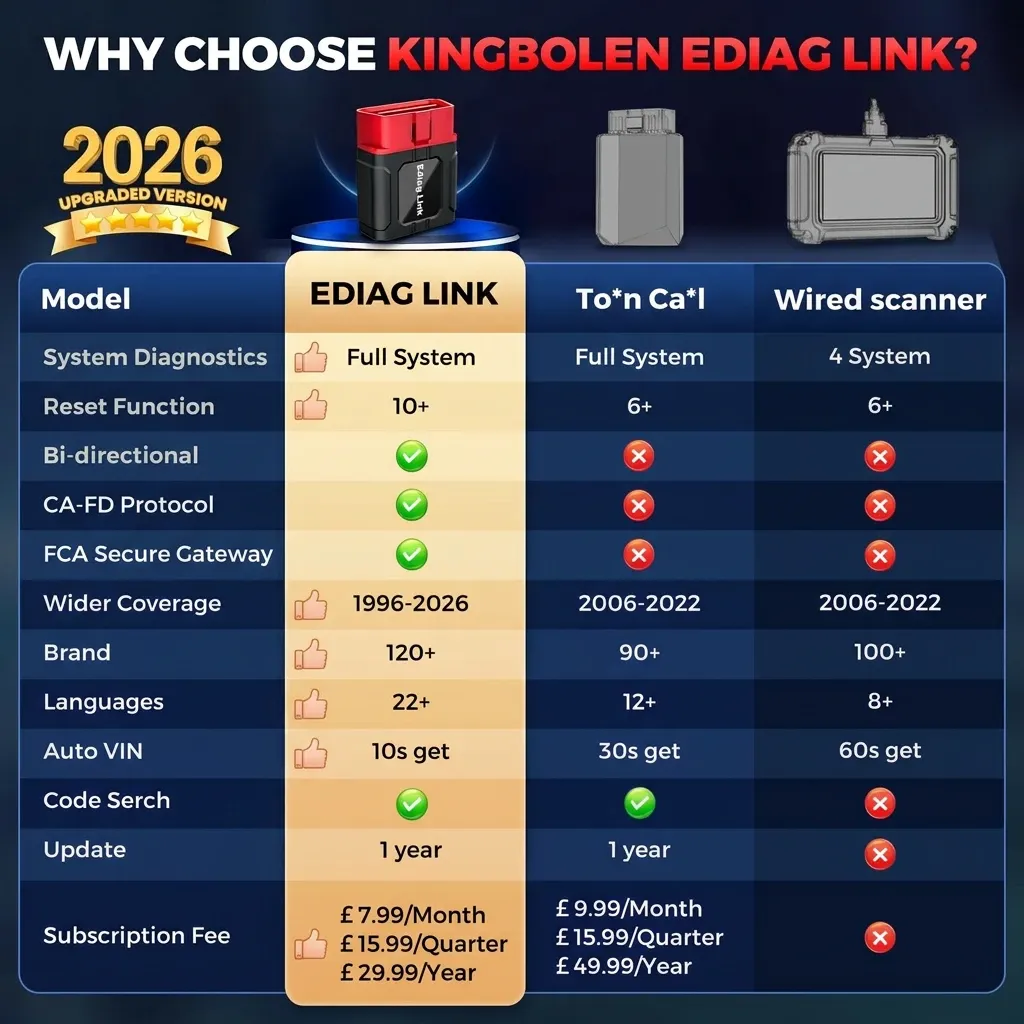
TL;DR: An automotive tool set is a comprehensive collection of mechanical instruments and electronic diagnostic devices used to inspect, maintain, and repair vehicles. Based on our testing, a modern UK tool kit must include core hand tools (spanners, sockets, and torque wrenches) alongside a digital OBD2 diagnostic scanner to effectively handle both physical repairs and electronic fault codes.
An automotive tool set is essentially your complete arsenal for vehicle maintenance, encompassing everything from traditional mechanical hand tools to modern digital diagnostic equipment. A well-chosen automotive tool set saves time, reduces guesswork, and helps you tackle jobs properly the first time. For UK motorists, home mechanics, and mobile technicians, the right set is no longer just about spanners and sockets. Consequently, modern vehicle maintenance often needs a mix of mechanical hand tools and electronic diagnostics, especially when fault codes, warning lights, and service resets are involved.
If you have ever started a straightforward repair only to realise you are missing a trim tool, torque wrench bit, or scan function, you already know why buying the right kit matters. Therefore, a practical automotive tool set should match the cars you work on, the jobs you actually do, and the strict level of access modern vehicles demand.
At eDiagLink, our focus is on helping drivers and technicians turn a smartphone into a powerful bi-directional automotive scan tool with all-system diagnostics and 10+ service resets. Based on our extensive testing in real-world garage environments, that matters because today’s most useful automotive tool set often combines physical tools with a capable Bluetooth OBD2 scanner rather than relying on metal tools alone.
Key Takeaways
- An automotive tool set should include core hand tools, torque tools, trim tools, and diagnostic capability.
- For modern cars in the UK, a scan tool is often as important as sockets and screwdrivers.
- Buy for the jobs you do most: servicing, brakes, battery work, diagnostics, or electrical repair.
- Look for durable materials such as chrome vanadium steel, clear sizing, and sensible case organisation.
- UK buyers should consider MOT-related fault diagnosis, roadside practicality, and compatibility with British-market vehicles.
- A Bluetooth OBD2 scanner can add real value to an automotive tool set by reading codes, viewing live data, and supporting service functions.
What is included in an automotive tool set?
An automotive tool set is a collection of tools designed specifically for vehicle inspection, maintenance, and repair. In simple terms, it is the working kit that lets you remove components, carry out servicing tasks, make adjustments, and correctly diagnose faults.
Older definitions focused almost entirely on mechanical hand tools; however, that is no longer enough for many vehicles on UK roads. Today’s cars use complex electronics across engine management, braking systems, steering, airbag systems, and body control modules. Furthermore, a useful automotive tool set now sits in two parts:
- Mechanical tools for physical jobs such as changing spark plugs, removing wheels, or replacing filters.
- Diagnostic tools for reading fault codes, checking live sensor data, and carrying out supported service functions.
This shift is easy to see in national data. The Society of Motor Manufacturers and Traders reported that battery electric car registrations rose by 21.4% in 2024 in the UK, taking a 19.6% market share of new car registrations (SMMT). According to UK industry guidelines, even without focusing purely on EVs, that wider move towards electronically controlled vehicles means digital diagnostics are now central to day-to-day maintenance.
Why do I need a diagnostic scanner in my automotive tool set?
A cheap socket set can be useful, but it certainly does not make a complete automotive tool set. Many common tasks on British-market vehicles now involve electronic checks before or after the mechanical work. In addition, clearing fault memories after replacing components, checking battery voltage behaviour, or confirming sensor readings can save hours of unnecessary parts swapping.
This is particularly relevant if your car is used for commuting, school runs, or caring responsibilities where downtime becomes expensive quickly. For NHS staff working shifts or anyone who depends on their vehicle daily, identifying an issue early with proper diagnostics can help avoid being stranded or booking unnecessary workshop time.
The same applies to garages and mobile mechanics. Customers increasingly expect clear evidence of faults rather than guesswork. Consequently, a modern setup may include ratchets and pliers in one case, then a smartphone-connected scanner in another.
If you want to understand how digital diagnostics fit alongside traditional workshop gear, read our guide to scanner car diagnostic equipment and what UK buyers should look for.
What are the essential tools every mechanic needs?
Which sockets and ratchets are best for car repair?
This is still the backbone of most kits. Based on our testing, a decent set should cover common metric sizes used across modern UK vehicles. Look for:
- 1/4", 3/8", and 1/2" drive options
- Deep and shallow sockets
- Extension bars and universal joints
- A fine-tooth ratchet for tighter engine bay access
Twelve-point sockets have their place; nevertheless, six-point sockets generally grip fasteners more securely when higher torque is needed.
What type of spanners do I need?
Combination spanners remain essential where sockets cannot reach cleanly. Flex-head ratchet spanners can significantly speed up awkward work around suspension or under-bonnet assemblies.
Which screwdrivers and bit sets are required?
A proper automotive tool set should include flathead, Phillips, Pozidriv, Torx, and hex bits. European vehicles often rely heavily on Torx fittings internally and externally.
What pliers and cutters should be included?
You will want long-nose pliers, combination pliers, side cutters, and ideally hose clamp pliers if you perform routine cooling system work.
Why is a torque wrench important?
This is one of the most overlooked items by DIY users. Wheel fasteners, spark plugs, and many engine components need accurate torque settings rather than feel alone. According to UK MOT guidelines and general safety standards, for critical work such as wheels or brake components, guessing is poor practice.
What are trim removal tools used for?
Plastic trim levers help remove clips and panels without marking dashboards or door cards. They are inexpensive yet save a great deal of frustration when fitting accessories or tracing wiring faults.
When should I use pry bars, breaker bars, and hammers?
These help with seized fasteners or stubborn suspension work. However, they should be chosen carefully so they complement rather than overload your kit.
What electrical testing gear is necessary?
A multimeter is valuable for battery checks, continuity testing, and voltage measurement. Moreover, if you handle wiring repairs regularly, terminal release tools also earn their keep.
How does a diagnostic scan tool fit into the kit?
This is where many buyers under-spec their setup. A Bluetooth OBD2 scanner gives your automotive tool set much broader real-world value by letting you check fault codes from your phone before taking parts off unnecessarily.
How do you diagnose car problems at home?
A warning light does not tell you which part to replace; rather, it tells you there is a problem requiring investigation. That distinction matters heavily. Replacing sensors blindly can become far more expensive than buying proper diagnostic capability from the start.
Based on our experience at eDiagLink, a strong diagnostic addition to your automotive tool set can help you:
- Read and clear manufacturer-specific fault codes to pinpoint failing components.
- Monitor live sensor data, such as coolant temperature and mass air flow, in real-time.
- Perform essential service resets, including oil life, electronic parking brakes (EPB), and steering angle sensors.
- Ensure your vehicle meets basic electronic health standards prior to an annual MOT test.
Ready to upgrade your toolkit with eDiagLink?
Get Yours Now — £61.06